
Computer science is the study of computation, information, and automation. Computer science spans theoretical disciplines to applied disciplines.
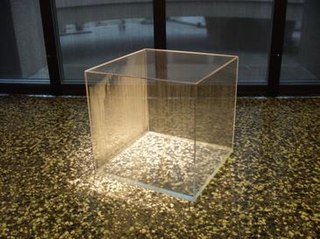
Generative art is post-conceptual art that has been created with the use of an autonomous system. An autonomous system in this context is generally one that is non-human and can independently determine features of an artwork that would otherwise require decisions made directly by the artist. In some cases the human creator may claim that the generative system represents their own artistic idea, and in others that the system takes on the role of the creator.

Theoretical computer science is a subfield of computer science and mathematics that focuses on the abstract and mathematical foundations of computation.

Edward Marczewski was a Polish mathematician. He was born Szpilrajn but changed his name while hiding from Nazi persecution.

Logic in computer science covers the overlap between the field of logic and that of computer science. The topic can essentially be divided into three main areas:

Alexander R. Galloway is an author and professor in the Department of Media, Culture, and Communication at New York University. He has a bachelor's degree in Modern Culture and Media from Brown University and earned a Ph.D. in literature from Duke University in 2001. Galloway is known for his writings on philosophy, media theory, contemporary art, film, and video games.
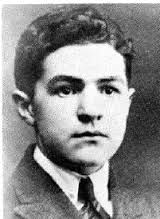
Mojżesz Presburger, or Prezburger, was a Polish Jewish mathematician, logician, and philosopher. He was a student of Alfred Tarski, Jan Łukasiewicz, Kazimierz Ajdukiewicz, and Kazimierz Kuratowski. He is known for, among other things, having invented Presburger arithmetic as a student in 1929 – a form of arithmetic in which one allows induction but removes multiplication, to obtain a decidable theory.
Patrick Colonel Suppes was an American philosopher who made significant contributions to philosophy of science, the theory of measurement, the foundations of quantum mechanics, decision theory, psychology and educational technology. He was the Lucie Stern Professor of Philosophy Emeritus at Stanford University and until January 2010 was the Director of the Education Program for Gifted Youth also at Stanford.

Andrzej Wojciech Trybulec was a Polish mathematician and computer scientist noted for work on the Mizar system.
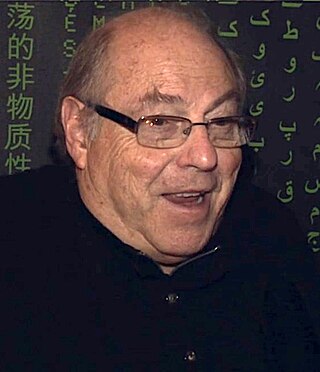
Roy Ascott FRSA is a British artist, who works with cybernetics and telematics on an art he calls technoetics by focusing on the impact of digital and telecommunications networks on consciousness. Since the 1960s, Ascott has been a practitioner of interactive computer art, electronic art, cybernetic art and telematic art.
Peter Grzybowski was a Polish multimedia and performance artist and a painter. He studied at the Faculty of Painting of the Academy of Fine Arts in Kraków (ASP), graduating in 1982. He first performed in 1981. He was a figure in the Polish performance art movement of the 1980s, performing individually and with Awacs Group (1982–1987) and KONGER (1984–1986). From 1985 he lived in the USA.

Rajeev Alur is an American professor of computer science at the University of Pennsylvania who has made contributions to formal methods, programming languages, and automata theory, including notably the introduction of timed automata and nested words.
Waldemar Świerzy was a Polish artist.
Informatics is the study of computational systems. According to the ACM Europe Council and Informatics Europe, informatics is synonymous with computer science and computing as a profession, in which the central notion is transformation of information. In some cases, the term "informatics" may also be used with different meanings, e.g. in the context of social computing, or in context of library science.

Tomasz Urbanowicz is an architect and a designer of architectural glass art.

The history of Polish computing (informatics) began during the Second World War with breaking the Enigma machine code by Polish mathematicians. After World War II, work on Polish computers began. Poles made a significant contribution to both the theory and technique of world computing.

Anka Leśniak is a Polish contemporary artist, born and educated in Łódź. She specialises in installation art, performance, video art and painting.
José Meseguer Guaita is a Spanish computer scientist, and professor at the University of Illinois at Urbana–Champaign. He leads the university's Formal Methods and Declarative Languages Laboratory.

Mohamed Rafiquzzaman is a computer scientist, electrical engineer, academic and author. He is a professor of Electrical and Computer Engineering at California State Polytechnic University, Pomona, and a Founder and President of Rafi Systems Inc., California a manufacturer of Intraocular (Cataract) lenses.


