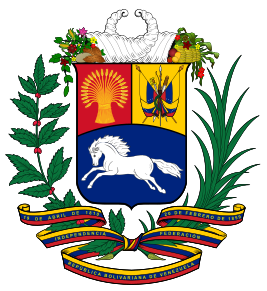
The politics of Venezuela occurs in a framework explained in Government of Venezuela.

The National Assembly is the de jure legislature for Venezuela that was first elected in 2000. It is a unicameral body made up of a variable number of members, who were elected by a "universal, direct, personal, and secret" vote partly by direct election in state-based voting districts, and partly on a state-based party-list proportional representation system. The number of seats is constant, each state and the Capital district elected three representatives plus the result of dividing the state population by 1.1% of the total population of the country. Three seats are reserved for representatives of Venezuela's indigenous peoples and elected separately by all citizens, not just those with indigenous backgrounds. For the 2010-2015 period the number of seats was 165. All deputies serve five-year terms. The National Assembly meets in the Federal Legislative Palace in Venezuela's capital, Caracas.
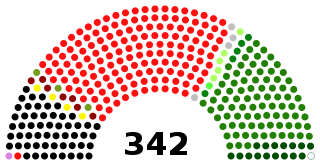
The National Assembly is the lower house of the bicameral Majlis-e-Shura, which also comprises the President of Pakistan and Senate of Pakistan. The National Assembly and the Senate both convene at Parliament House in Islamabad. The National Assembly is a democratically elected body consisting of a total of 336 members, before 25th ammendment they used to be 342' who are referred to as Members of the National Assembly (MNAs), of which 272 are directly elected members and 70 reserved seats for women and religious minorities. A political party must secure 137 seats to obtain and preserve a majority.

The Parliament of Pakistan is the federal and supreme legislative body of Pakistan. It is a bicameral federal legislature that consists of the Senate as the upper house and the National Assembly, as the lower house. According to the constitution of Islamic Republic of Pakistan, the President of Pakistan is also a component of the Parliament. The National Assembly is elected for a five-year term on the basis of adult franchise and one-man one-vote. The tenure of a Member of the National Assembly is for the duration of the house, or sooner, in case the Member dies or resigns. The tenure of the National Assembly also comes to an end if dissolved on the advice of the Prime Minister or by the president in his discretion under the Constitution.

The Justice First is a centrist political party in Venezuela. Founded in 1992 as a civil association, it became a political party in 2000. Henrique Capriles Radonski is the former candidate of the party in 2013 Venezuelan presidential election.

The National Assembly is one of the two houses (chambers) of the Parliament of Cambodia. It is referred to as the lower house, with the Senate being referred to as the upper house.

A constitutional referendum was held in Bolivia on 25 January 2009, postponed from the initially planned dates of 4 May 2008 and then 7 December 2008. Drafted by the Constituent Assembly in 2007, the new constitution was approved in the referendum according to an exit poll by Ipsos Apoyo for La Razón and ATB, a Bolivian television network. Furthermore, it required early elections to be held on 6 December 2009.

The following outline is provided as an overview of and topical guide to South America.
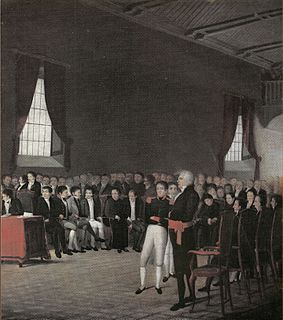
The history of Venezuela reflects events in areas of the Americas colonized by Spain starting 1522; amid resistance from indigenous peoples, led by Native caciques, such as Guaicaipuro and Tamanaco. However, in the Andean region of western Venezuela, complex Andean civilization of the Timoto-Cuica people flourished before European contact. In 1811, it became one of the first Spanish-American colonies to declare independence, which was not securely established until 1821, when Venezuela was a department of the federal republic of Gran Colombia. It gained full independence as a separate country in 1830. During the 19th century, Venezuela suffered political turmoil and autocracy, remaining dominated by regional caudillos until the mid-20th century. Since 1958, the country has had a series of democratic governments. Economic shocks in the 1980s and 1990s led to several political crises, including the deadly Caracazo riots of 1989, two attempted coups in 1992, and the impeachment of President Carlos Andrés Pérez for embezzlement of public funds in 1993. A collapse in confidence in the existing parties saw the 1998 election of former coup-involved career officer Hugo Chávez and the launch of the Bolivarian Revolution, beginning with a 1999 Constituent Assembly to write a new Constitution of Venezuela. This new constitution officially changed the name of the country to República Bolivariana de Venezuela.

The Pakistani nationality law governs citizenship of the Islamic Republic of Pakistan. The principal legislation determining nationality, the Pakistan Citizenship Act, was passed by the Constituent Assembly of Pakistan on 13 April 1951. Since Cambodia changed its laws, Pakistan is the only country in Asia with unconditional jus soli citizenship rights.
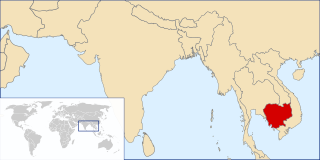
United Nations Security Council resolution 840, adopted unanimously on 15 June 1993, after recalling resolutions 668 (1990), 745 (1992), 810 (1993), 826 (1993), 835 (1993) and other relevant resolutions, the Council endorsed the results of the 1993 general elections in Cambodia.
The Cambodian Constituent Assembly was a body elected in 1993 to draft a constitution for Cambodia as provided in the Paris Peace Accord. The writing of the Cambodian Constitution took place between June and September 1993 and it resulted in the transformation of the political situation of Cambodia from civil-war-marred, autocratic oligarchy to a Constitutional Monarchy. Achieved under the guidance, auspices and funding of the United Nations Transitional Authority in Cambodia (UNTAC), the drafting of the constitution was the culmination of a larger, $1.6 billion effort to end the decades-old Cambodian Civil War and bring the warring parties into political, rather than military competition. The result of the process was the creation of a constitution for Cambodia that, at least on paper, guarantees free political competition, regular elections, equal rights and representation and universal suffrage.
Francisco José Ameliach Orta is a Venezuelan retired military officer and politician who is vice president of the United Socialist Party of Venezuela (PSUV).
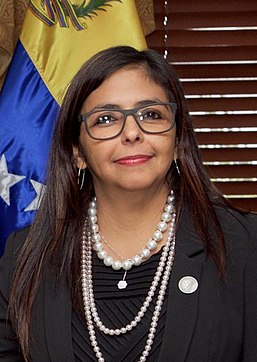
Constituent Assembly elections were held in Venezuela on 30 July 2017 to elect the members of the 2017 Constituent National Assembly Unlike the 1999 Constituent National Assembly, which was assembled following a referendum, the 2017 election was unconstitutionally convened by the presidential decree of President Nicolás Maduro.

The Constituent National Assembly is a constituent assembly elected in 2017 to draft a new constitution for Venezuela. Its members were elected in a special 2017 election that was condemned by over forty mostly Latin American and Western states. The Democratic Unity Roundtable—the opposition to the incumbent ruling party—also boycotted the election claiming that the Constituent Assembly was "a trick to keep [the incumbent ruling party] in power." Since the opposition did not participate in the election, the incumbent Great Patriotic Pole, dominated by the United Socialist Party of Venezuela, won almost all seats in the assembly by default.

Parliamentary elections are scheduled to be held in Venezuela by 2020 to elect the 167 deputies of the National Assembly.


