
Donald Allen Wollheim was an American science fiction editor, publisher, writer, and fan. As an author, he published under his own name as well as under pseudonyms, including David Grinnell.
Feminist science fiction is a subgenre of science fiction focused on theories that include feminist themes including but not limited to gender inequality, sexuality, race, economics, reproduction, and environment. Feminist SF is political because of its tendency to critique the dominant culture. Some of the most notable feminist science fiction works have illustrated these themes using utopias to explore a society in which gender differences or gender power imbalances do not exist, or dystopias to explore worlds in which gender inequalities are intensified, thus asserting a need for feminist work to continue.
Science fiction and fantasy serve as important vehicles for feminist thought, particularly as bridges between theory and practice. No other genres so actively invite representations of the ultimate goals of feminism: worlds free of sexism, worlds in which women's contributions are recognized and valued, worlds that explore the diversity of women's desire and sexuality, and worlds that move beyond gender.

Robert Anson Heinlein was an American science fiction author, aeronautical engineer, and naval officer. Sometimes called the "dean of science fiction writers", he was among the first to emphasize scientific accuracy in his fiction, and was thus a pioneer of the subgenre of hard science fiction. His published works, both fiction and non-fiction, express admiration for competence and emphasize the value of critical thinking. His plots often posed provocative situations which challenged conventional social mores. His work continues to have an influence on the science-fiction genre, and on modern culture more generally.

Science fiction is a genre of speculative fiction which typically deals with imaginative and futuristic concepts such as advanced science and technology, space exploration, time travel, parallel universes, extraterrestrial life, sentient artificial intelligence, cybernetics, certain forms of immortality, and the singularity. Science fiction predicted several existing inventions, such as the atomic bomb, robots and borazon, whose names entirely match their fictional predecessors.

Science fiction fandom or SF fandom is a community or fandom of people interested in science fiction in contact with one another based upon that interest. SF fandom has a life of its own, but not much in the way of formal organization.
Utopian and dystopian fiction are genres of speculative fiction that explore social and political structures. Utopian fiction portrays a setting that agrees with the author's ethos, having various attributes of another reality intended to appeal to readers. Dystopian fiction offers the opposite: the portrayal of a setting that completely disagrees with the author's ethos. Some novels combine both genres, often as a metaphor for the different directions humanity can take depending on its choices, ending up with one of two possible futures. Both utopias and dystopias are commonly found in science fiction and other types of speculative fiction.

Lyon Sprague de Camp was an American writer of science fiction, fantasy and non-fiction. In a career spanning 60 years, he wrote over 100 books, including novels and works of non-fiction, including biographies of other fantasy authors. He was a major figure in science fiction in the 1930s and 1940s.
Science fiction comedy or comic science fiction is a subgenre of science fiction or science fantasy that exploits the science-fiction (SF) genre's conventions for comedic effect. Comic science fiction often mocks or satirizes standard SF conventions – such as alien invasion of Earth, interstellar travel, or futuristic technology. It can also satirize and criticize present-day society.

The alien invasion or space invasion is a common feature in science fiction stories and film, in which extraterrestrials invade the Earth either to exterminate and supplant human life, enslave it under an intense state, harvest people for food, steal the planet's resources, or destroy the planet altogether.

Science fiction is a film genre that uses speculative, fictional science-based depictions of phenomena that are not fully accepted by mainstream science, such as extraterrestrial lifeforms, spacecraft, robots, cyborgs, interstellar travel or other technologies. Science fiction films have often been used to focus on political or social issues, and to explore philosophical issues like the human condition.

Robert Sheckley was an American writer. First published in the science-fiction magazines of the 1950s, his many quick-witted stories and novels were famously unpredictable, absurdist, and broadly comical.

Robert Silverberg is an American author and editor, best known for writing science fiction. He is a multiple winner of both Hugo and Nebula Awards, a member of the Science Fiction and Fantasy Hall of Fame, and a Grand Master of SF. He has attended every Hugo Awards ceremony since the inaugural event in 1953.

Routledge is a British multinational publisher. It was founded in 1836 by George Routledge, and specialises in providing academic books, journals and online resources in the fields of humanities, behavioural science, education, law, and social science. The company publishes approximately 1,800 journals and 5,000 new books each year and their backlist encompasses over 70,000 titles. Routledge is claimed to be the largest global academic publisher within humanities and social sciences.
The exploration of politics in science fiction is arguably older than the identification of the genre. One of the earliest works of modern science fiction, H. G. Wells’ The Time Machine, is an extrapolation of the class structure of the United Kingdom of his time, an extreme form of social Darwinism; during tens of thousands of years, human beings have evolved into two different species based on their social class.
Social science fiction is a subgenre of science fiction, usually soft science fiction, concerned less with technology/space opera and more with speculation about society. In other words, it "absorbs and discusses anthropology" and speculates about human behavior and interactions.

Science fiction and fantasy in Poland dates to the late 18th century. During the latter years of the People's Republic of Poland, a very popular genre of science fiction was social science fiction. Later, many other genres gained prominence.
Lancer Books was a publisher of paperback books founded by Irwin Stein and Walter Zacharius that operated from 1961 through 1973. While it published stories of a number of genres, it was noted most for its science fiction and fantasy, particularly its series of Robert E. Howard's Conan the Barbarian tales, the first publication of many in paperback format. It published the controversial novel Candy by Terry Southern and Mason Hoffenberg, and Ted Mark's ribald series The Man from O.R.G.Y. Lancer paperbacks had a distinctive appearance, many bearing mauve or green page edging.
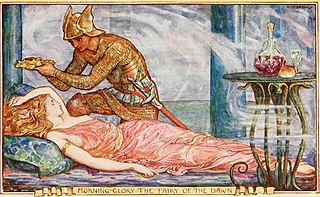
Fantasy is a genre of speculative fiction involving magical elements, typically set in a fictional universe and sometimes inspired by mythology and folklore. Its roots are in oral traditions, which then became fantasy literature and drama. From the twentieth century, it has expanded further into various media, including film, television, graphic novels, manga, animations and video games.
The anthropologist Leon E. Stover says of science fiction's relationship to anthropology: "Anthropological science fiction enjoys the philosophical luxury of providing answers to the question "What is man?" while anthropology the science is still learning how to frame it". The editors of a collection of anthropological SF stories observed:
Anthropology is the science of man. It tells the story from ape-man to spaceman, attempting to describe in detail all the epochs of this continuing history. Writers of fiction, and in particular science fiction, peer over the anthropologists' shoulders as the discoveries are made, then utilize the material in fictional works. Where the scientist must speculate reservedly from known fact and make a small leap into the unknown, the writer is free to soar high on the wings of fancy.

Space opera is a subgenre of science fiction that emphasizes science fictional space warfare, with use of melodramatic, risk-taking space adventures, relationships, and chivalric romance. Set mainly or entirely in outer space, it features technological and social advancements in faster-than-light travel, futuristic weapons, and sophisticated technology, on a backdrop of galactic empires and interstellar wars with fictional aliens, often in fictional galaxies. The term has no relation to opera music, but is instead a play on the terms "soap opera", a melodramatic television series, and "horse opera", which was coined during the 1930s to indicate a clichéd and formulaic Western film. Space operas emerged in the 1930s and continue to be produced in literature, film, comics, television, video games and board games.