

Below are the Federal lands in the United States state of Tennessee.
Below are the Federal lands in the United States state of Tennessee.

Fort Donelson was a fortress built early in 1862 by the Confederacy during the American Civil War to control the Cumberland River, which led to the heart of Tennessee, and thereby the Confederacy. The fort was named after Confederate general Daniel S. Donelson.

The Natchez Trace, also known as the Old Natchez Trace, is a historic forest trail within the United States which extends roughly 440 miles (710 km) from Nashville, Tennessee, to Natchez, Mississippi, linking the Cumberland, Tennessee, and Mississippi rivers.
A National Parkway is a designation for a protected area in the United States given to scenic roadways with a protected corridor of surrounding parkland. National Parkways often connect cultural or historic sites. The U.S. National Park Service manages the parkways.

The Battle of Fort Henry was fought on February 6, 1862, in Stewart County, Tennessee, during the American Civil War. It was the first important victory for the Union and Brig. Gen. Ulysses S. Grant in the Western Theater.

The Natchez Trace Parkway is a limited-access national parkway in the Southeastern United States that commemorates the historic Natchez Trace and preserves sections of that original trail. Its central feature is a two-lane road that extends 444 miles (715 km) from Natchez, Mississippi, to Nashville, Tennessee. Access to the parkway is limited, with more than 50 access points in Mississippi, Alabama, and Tennessee. The southern end of the route is in Natchez at its intersection with Liberty Road, and the northern end is northeast of Fairview, Tennessee, in the suburban community of Pasquo, at an intersection with Tennessee State Route 100. In addition to Natchez and Nashville, larger cities along the route include Jackson and Tupelo, Mississippi, and Florence, Alabama.
Fort Donelson National Battlefield preserves Fort Donelson and Fort Heiman, two sites of the American Civil War Forts Henry and Donelson Campaign, in which Union Army Brigadier General Ulysses S. Grant and Flag Officer Andrew Hull Foote captured three Confederate forts and opened two rivers, the Tennessee River and the Cumberland River, to control by the Union Navy. The commanders received national recognition for their victories in February 1862, as they were the first major Union successes of the war. The capture of Fort Donelson and its garrison by the Union led to the capture of Tennessee's capital and industrial center, Nashville, which remained in Union hands from February 25, 1862, until the end of the war, and gave the Union effective control over much of Tennessee. This struck a major blow to the Confederacy early in the war.

Shiloh National Military Park preserves the American Civil War Shiloh and Corinth battlefields. The main section of the park is in the unincorporated community of Shiloh, about nine miles (14 km) south of Savannah, Tennessee, with additional areas located in the city of Corinth, Mississippi, 23 miles (37 km) southwest of Shiloh and the Parker's Crossroads Battlefield in the city of Parkers Crossroads, Tennessee. The Battle of Shiloh began a six-month struggle for the key railroad junction at Corinth. Afterward, Union forces marched from Pittsburg Landing to take Corinth in a May siege, then withstood an October Confederate counter-attack.

The Natchez Trace Trail is a designated National Scenic Trail in the United States, whose route generally follows sections of the 444-mile (715 km) Natchez Trace Parkway through the states of Tennessee, Alabama, and Mississippi. The Natchez Trace Trail is not a long, continuous footpath, as is the case with other national scenic trails ; rather, only a limited number of trail segments along the route, currently over 60 miles (97 km) of trail, have been developed for hiking and horseback riding. Moreover, the Natchez Trace Trail, unlike many others that rely heavily on volunteers for trail construction and maintenance, is managed and maintained by the National Park Service. Sections of the trail follow along the Natchez Trace Parkway road shoulder, and cross county and state roads. It was originally intended to be longer and follow most of the Natchez Trace Parkway, but only a portion was built.
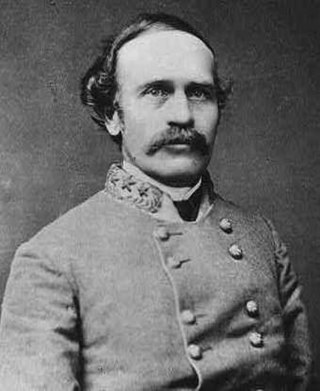
Bushrod Rust Johnson was a Confederate general in the American Civil War and an officer in the United States Army. As a university professor he had been active in the state militias of Kentucky and Tennessee and on the outbreak of hostilities he sided with the South, despite having been born in the North into a family of abolitionist Quakers. As a divisional commander he managed to evade capture at the Battle of Fort Donelson, but was wounded at the Battle of Shiloh. He served under Robert E. Lee throughout the 10-month Siege of Petersburg, and surrendered with him at Appomattox.

The American Battlefield Trust is a charitable organization whose primary focus is in the preservation of battlefields of the Revolutionary War, the War of 1812, and the American Civil War, through the acquisition of battlefield land. The American Battlefield Trust was formerly known as the Civil War Trust. On May 8, 2018, the organization announced the creation of the American Battlefield Trust as the umbrella organization for two divisions, the Civil War Trust and the Revolutionary War Trust, which was formerly known as "Campaign 1776".
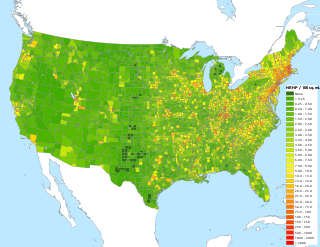
The National Register of Historic Places in the United States is a register including buildings, sites, structures, districts, and objects. The Register automatically includes all National Historic Landmarks as well as all historic areas administered by the U.S. National Park Service. Since its introduction in 1966, more than 97,000 separate listings have been added to the register.

Fort Nashborough, also known as Fort Bluff, Bluff Station, French Lick Fort, Cumberland River Fort and other names, was the stockade established in early 1779 in the French Lick area of the Cumberland River valley, as a forerunner to the settlement that would become the city of Nashville, Tennessee. The fort was not a military garrison. The log stockade was square in shape and covered 2 acres (8,100 m2). It contained 20 log cabins and was protection for the settlers against wild animals and Indians. James Robertson and John Donelson are considered the founders, and colloquially, the "founders of Tennessee". The fort was abandoned in 1794, but the settlement, now the city of Nashville, became the capital of the new state of Tennessee in 1843.

America's 11 Most Endangered Places or America's 11 Most Endangered Historic Places is a list of places in the United States that the National Trust for Historic Preservation considers the most endangered. It aims to inspire Americans to preserve examples of architectural and cultural heritage that could be "relegated to the dustbins of history" without intervention.
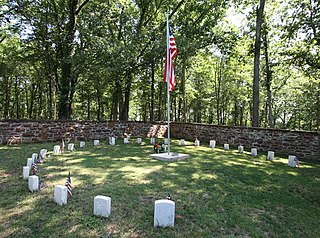
Ball's Bluff Battlefield Regional Park and National Cemetery is a battlefield area and a United States National Cemetery, located 2 miles (3.2 km) northeast of Leesburg, Virginia. The cemetery is the third smallest national cemetery in the United States. Fifty-four Union Army dead from the Battle of Ball's Bluff are interred in 25 graves in the half-acre plot; the identity of all of the interred except for one, James Allen of the 15th Massachusetts, are unknown. Monuments to fallen Confederate Sergeant Clinton Hatcher and Union brigade commander Edward Dickinson Baker are located next to the cemetery, though neither is buried there. While the stone wall-enclosed cemetery itself is managed through the Culpeper National Cemetery and owned by the Department of Veterans Affairs, the balance of the 223-acre (0.90 km2) park is managed through the Northern Virginia Regional Park Authority.
Since 1872 the United States National Park System has grown from a single, public reservation called Yellowstone National Park to include 430 natural, historical, recreational, and cultural areas throughout the United States, its territories, and island possessions. These areas include National Parks, National Monuments, National Memorials, National Military Parks, National Historic Sites, National Parkways, National Recreation Areas, National Seashores, National Scenic Riverways, and National Scenic Trails.
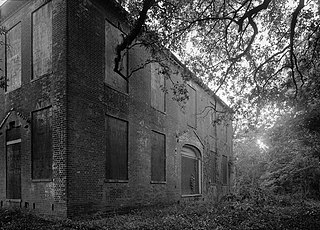
The Van Dorn House is a historic hilltop residence in Port Gibson, Mississippi built circa 1830 for Peter Aaron Van Dorn and his wife. He was a lawyer from New Jersey who made his fortune in this area, having a practice, gaining political appointments, and becoming a cotton planter. This was the home for years for his large family in Port Gibson, including son Earl Van Dorn. The latter was a career U.S. Army officer who joined the Confederate Army after the start of the Civil War, ultimately reaching the rank of Major General.
The Civil War Trust's Civil War Discovery Trail is a heritage tourism program that links more than 600 U.S. Civil War sites in more than 30 states. The program is one of the White House Millennium Council's sixteen flagship National Millennium Trails. Sites on the trail include battlefields, museums, historic sites, forts and cemeteries.
Peter Aaron Van Dorn (1773–1837) was an American lawyer, judge and cotton planter in Mississippi. Born and raised in New Jersey, with a law degree from Princeton, as a young man he migrated to the Mississippi Territory, where he made his career and fortune. He became a major planter with a plantation on the Yazoo River, a law practice in Port Gibson, and a seat as a judge on the Orphan's Court. He was one of the founders of Jackson, Mississippi, designated as the capital when it became a state.