Related Research Articles
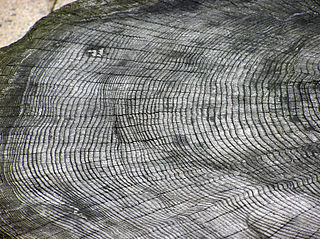
Dendrochronology is the scientific method of dating tree rings to the exact year they were formed in a tree. As well as dating them, this can give data for dendroclimatology, the study of climate and atmospheric conditions during different periods in history from the wood of old trees. Dendrochronology derives from the Ancient Greek dendron, meaning "tree", khronos, meaning "time", and -logia, "the study of".

Waldo Rudolph Tobler was an American-Swiss geographer and cartographer. Tobler is regarded as one of the most influential geographers and cartographers of the late 20th century and early 21st century. He is most well known for coining what has come to be referred to as Tobler's first law of geography. He also coined what has come to be referred to as Tobler's second law of geography.
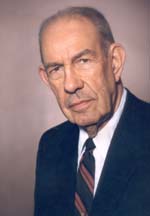
Arthur H. Robinson was an American geographer and cartographer, who was professor in the Geography Department at the University of Wisconsin–Madison from 1947 until he retired in 1980. He was a prolific writer and influential philosopher on cartography, and one of his most notable accomplishments is the Robinson projection of 1961.

The American Association of Geographers (AAG) is a non-profit scientific and educational society aimed at advancing the understanding, study, and importance of geography and related fields. Its headquarters is located in Washington, D.C. The organization was founded on December 29, 1904, in Philadelphia, as the Association of American Geographers, with the American Society of Professional Geographers later amalgamating into it in December 1948 in Madison, Wisconsin. As of 2020, the association has more than 10,000 members, from nearly 100 countries. AAG members are geographers and related professionals who work in the public, private, and academic sectors.
Donald William Meinig was an American geographer. He was Maxwell Research Professor Emeritus of Geography at the Maxwell School of Citizenship and Public Affairs, Syracuse University.
Thomas W. Swetnam is Regents' Professor Emeritus of Dendrochronology at the University of Arizona, studying disturbances of forest ecosystems across temporal and spatial scales. He served as the Director of the Laboratory of Tree-Ring Research from 2000 to 2015.
Henri Grissino-Mayer was a tenured faculty member in the department of Geography at the University of Tennessee, Knoxville who resigned in lieu of termination on Oct. 1st, 2018 due to his own admission of sexual misconduct at the school.

Ronald John Johnston, OBE, FAcSS, FBA was a British geographer, known for elaborating his discipline's foundations, particularly its history and nature, and for his contributions to urban social geography and electoral geography. His broad scope is illustrated by the fact that he made extensive use of quantitative methods, while critically dealing with subjects of social and political relevance. Johnston authored or co-authored more than 50 books and 800 papers, and edited or co-edited a further more than 40 books. He edited The Dictionary of Human Geography and for the first four editions was its main editor.

Janelle Knox-Hayes is a Professor of Economic Geography in the Department of Urban Studies and Planning at the Massachusetts Institute of Technology. Her research and teaching explore the institutional nature of social, economic and environmental systems, and the ways in which these are impacted by changing socio-economic spatial and temporal dynamics.
Louise Filion is a Canadian professor of biogeography.
Thomas Thorstein Veblen is an American forest ecologist and physical geographer known for his work on the ecology of Nothofagus forests in the Southern Hemisphere and on the ecology of conifer forests in the southern Rocky Mountains of the U.S.A. He is an Arts and Sciences College Professor of Distinction at University of Colorado at Boulder, USA (2006).
Adrian J. Bailey is a scholar known for his research in population, migration, economic, and social geography. He is currently chair professor of geography and Dean of Social Sciences at Hong Kong Baptist University. His research interests include the study of transnationalism, with his work in this area exploring the diverse ways in which the state affects life outcomes among immigrants and refugees.
Susan E. Hanson is an American geographer. She is a Distinguished University Professor Emerita in the Graduate School of Geography at Clark University. Her research has focused on gender and work, travel patterns, and feminist scholarly approaches.
Dendropyrochronology is the science of using tree-ring dating to study and reconstruct the history of wild fires. It is a subfield of dendrochronology, along with dendroclimatology and dendroarchaeology.
Fritz Hans Schweingruber was a Swiss dendrochronologist and emeritus professor.

Joseph Russell Smith was an American geographer. He worked in the Department of Geography and Industry at the University of Pennsylvania and later the Columbia Business School where he chaired the economic geography program. From 1941 to 1942, he was president of the American Association of Geographers.
John Fraser Hart is an American geographer. Over the course of his career he published over 150 scholarly papers, over a dozen books, and taught over 50,000 university students in his 65 years of teaching from 1949 until his retirement in 2015.
Rachel Pain is Professor of Human Geography at Newcastle University since 2017 and was elected a Fellow of the Academy of Social Sciences in 2018.
Connie A. Woodhouse is a regents professor at the University of Arizona who is known for her use of tree rings to reconstruct the hydroclimate of the past, especially in western North America. In 2022 she was elected a fellow of the American Geophysical Union
Rebecca Lave is a geographer, professor of geography at Indiana University Bloomington (IU), and the current president of the American Association of Geographers (AAG). Her research focuses on critical geography, as it applies to physical geography, as part of the emerging field of critical physical geography. She has focused on bridging the gap between physical and human geography in her research, as a department chair at IU, and as the president of the AAG.
References
- James H. Speer faculty profile
- James H. Speer homepage
- Google Scholar Profile
- Researchgate Profile
- Academia.edu Profile
- Tree-Ring Society
- Fundamentals of Tree-Ring Research
- National Center for Science and Civic Engagement
- North American Dendroecological Fieldweek (NADEF)
- Speer et al. 2004
- Speer et al. 2009
- Clark et al. 2017
| International | |
|---|---|
| National | |
| Academics | |
| Other | |
