
Protected areas of South Australia consists of protected areas located within South Australia and its immediate onshore waters and which are managed by South Australian Government agencies. As of March 2018, South Australia contains 359 separate protected areas declared under the National Parks and Wildlife Act 1972, the Crown Land Management Act 2009 and the Wilderness Protection Act 1992 which have a total land area of 211,387.48 km2 (81,617.16 sq mi) or 21.5% of the state's area.

Mount Brown Conservation Park is a protected area in the Flinders Ranges of South Australia. The park has established walking trails, including a section of the Heysen Trail. The park is managed by the Department of Environment, Water and Natural Resources; entry is free. It is located 14 km (8.7 mi) south of Quorn and about 300 km (190 mi) north of the nearest airport at Adelaide.
Sir Joseph Banks Group Conservation Park is a protected area in the Australian state of South Australia located on the Sir Joseph Banks Group in Spencer Gulf about 25 kilometres (16 mi) east-northeast of Port Lincoln. The conservation park of which specific islands had been previously declared as Flora and Fauna Reserves under statutes in force prior to 1972, was proclaimed in 1972 under the National Parks and Wildlife Act 1972. It was declared ‘primarily for the conservation of Cape Barren geese, and to protect marine mammal habitat’. As of 1996, the conservation park did not include Spilsby island which is privately owned and ‘lighthouse reserves’ on other islands while the following islands have been added post-declaration - Reevesby Island which was added in 1974 and Dangerous Reef which was added in 1989. The conservation park was subsequently extended to include the waters within 2 nautical miles (4 km) of the shoreline of all islands in the group and Dangerous Reef via a declaration under the National Parks and Wildlife Act 1972 for the purpose of regulating and managing great white shark berleying activities. The conservation park is classified as an IUCN Category Ia protected area.
Neptune Islands Conservation Park is a protected area occupying most of the Neptune Islands in South Australia about 55 km (34 mi) south-south east of Port Lincoln. It was established in 1967 principally to protect a New Zealand fur seal breeding colony. The conservation park was subsequently expanded to include the adjoining waters in order to control and manage berleying activities used to attract great white sharks. As of 2002, the conservation park is the only place in Australia where shark cage diving to view great white sharks is legally permitted.

Great Australian Bight Marine National Park is a marine protected area in the Australian state of South Australia located 918 km (570 mi) west of the state capital of Adelaide. The national park was proclaimed under the National Parks and Wildlife Act 1972 (SA) by the South Australian Government on 26 September 1996 principally to protect the calving waters of the Southern right whale and the Australian sea lion populations. It consists of two sections occupying the ocean immediately adjoining the coastline up to a distance of 3 nautical miles and extending from the Western Australia border in the west to a locality known as the Tchalingaby Sandhills in the east. The gap between the two sections is also a protected area known as the Great Australian Bight Marine Park Whale Sanctuary which was proclaimed on 22 June 1995 under the Fisheries Act 1982 (SA). The national park is also part of the group of marine protected areas which are located together in waters within Australian and South Australian jurisdictions within the Great Australian Bight and which is collectively known as the Great Australian Bight Marine Park. Since late 2012, the national park and the whale sanctuary have also been within the boundaries of the Far West Coast Marine Park.
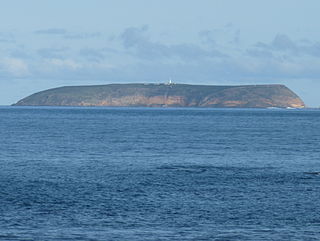
Althorpe Islands Conservation Park is a protected area in the Australian state of South Australia occupying the Althorpe Islands, Haystack Island and Seal Island in Investigator Strait near the town of Stenhouse Bay. The conservation park was proclaimed in 1972 following the enactment of the National Parks and Wildlife Act 1972 with the protection initially applying to the Western Islets in the Althorpe Islands, Haystack Island and Seal Island with Althorpe Island itself was not added until 1997. The purpose of the conservation park is ‘to protect important wildlife habitat, particularly for sea-bird populations’. It is classified as an IUCN Category Ia protected area.
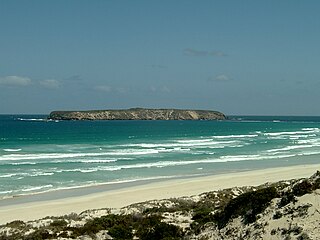
The Whidbey Isles Conservation Park is a protected area in the Australian state of South Australia which consists of seven islands located west-southwest of Coffin Bay, lower Eyre Peninsula. The group, which includes the Four Hummocks group, Perforated Island, Price Island and Golden Island, supports breeding populations of seabirds and marine mammals. Colonies of the endangered Australian Sea-lion and protected New Zealand Fur-seal occur on some of these islands. The conservation park is classified as an IUCN Category Ia protected area.
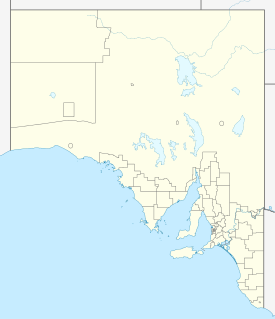
Waldegrave Islands Conservation Park is a protected area located on the following islands within the Investigator Group in South Australia: the Waldegrave Island, Little Waldegrave Island and the Watchers.
Gambier Islands Conservation Park is a protected area associated with the Gambier Islands Group which is located in the middle of the mouth of Spencer Gulf in South Australia about 71 kilometres south east of Port Lincoln. The conservation park consists of the following islands from within the group - North Island, South West Rock and Peaked Rocks. Wedge Island is not included in the conservation park. The land which now comprises the conservation park was previously declared as Fauna Reserves in March 1967 under the Fauna Conservation Act 1964 and was re-proclaimed in 1972 under the National Parks and Wildlife Act 1972. The area under protection is considered significant for the following reasons: 'a group of small islands utilised by seabirds and the Australian sea lion' and the 'North Island supports a population of the southern bush rat .' The conservation park is classified as an IUCN Category Ia protected area.
Ward Islands is an island group in the Australian state of South Australia located in the Investigator Group about 53 kilometres west by south of Cape Finniss on the west coast of Eyre Peninsula. The group was discovered and named by Matthew Flinders on 13 February 1802. The island group has enjoyed protected area status since the 1960s and since 2011, it been part of the Investigator Group Wilderness Protection Area.
Topgallant Islands is an island group in the Australian state of South Australia located in the Investigator Group about 22 kilometres south west of Cape Finniss on the west coast of Eyre Peninsula. The group was discovered and named by Matthew Flinders on 13 February 1802. The island group has enjoyed protected area status since the 1960s and since 2011, it has been part of the Investigator Group Wilderness Protection Area.
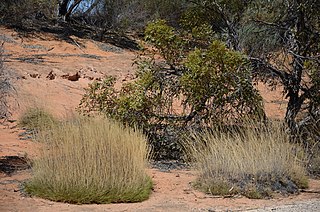
Bakara Conservation Park is a protected area of mallee scrub in the Murray Mallee region of South Australia. It is located in the locality of Maggea on the southern side of the Stott Highway.
Pearson Isles is an island group located in the Australian state of South Australia about 65 kilometres to 72 kilometres west south-west of Cape Finniss on the west coast of Eyre Peninsula within the larger island group, the Investigator Group. The group was discovered and named by Matthew Flinders on 13 February 1802. The group has four members - Pearson Island, a pair of islands known as the Veteran Isles and Dorothee Island. The island group has enjoyed protected area status starting in 1916 and since 2011, it has been part of the Investigator Group Wilderness Protection Area. The island group is notable as a venue for scientific research.
Dorothee Island is an island in the Australian state of South Australia which is part of the Pearson Isles which itself is part of the larger island grouping known as the Investigator Group. It is located about 69 kilometres west south-west of Cape Finniss on the west coast of Eyre Peninsula. It was discovered as part of the Pearson Isles by Matthew Flinders on 13 February 1802. The island was given its name in August 1969 in order to preserve a name used within the locality by the Baudin expedition. The island has enjoyed protected area status since at least 1972 and since 2011, it been part of the Investigator Group Wilderness Protection Area.
Veteran Isles is a pair of islands in the Australian state of South Australia which is part of the Pearson Isles which itself is part of the larger island group known as the Investigator Group. It is located about 69 kilometres west south-west of Cape Finniss on the west coast of Eyre Peninsula. It was discovered as part of the Pearson Isles by Matthew Flinders on 13 February 1802. The island was given its name in August 1969 in order to preserve a name used within the locality by the Baudin expedition. The island has enjoyed protected area status since at least 1972 and since 2011, it been part of the Investigator Group Wilderness Protection Area.
This page is based on this
Wikipedia article Text is available under the
CC BY-SA 4.0 license; additional terms may apply.
Images, videos and audio are available under their respective licenses.


