The modern history of Belarus began with the dissolution of the Soviet Union. The new Belarusian country struggled with many problems, including post-Soviet debt, nuclear arsenal, and inflation. These factors contributed to the current history of the Republic of Belarus, especially to the current leadership under Alexander Lukashenko, under whom the country's democracy backslided and later turning into a full authoritarian dictatorship.
The political changes in Belarus began in the era of Perestroika, a Soviet political reform movement promoted by the First SecretaryMikhail Gorbachev. Censorship became relaxed, the new Soviet authorities freed political prisoners, and the cultural renewal together with the emerging opposition movements.
From March to May 1990, elections to the Supreme Soviet of Byelorussia took place. The opposition Belarusian Popular Front, led by Pazniak, won around 25–37 seats.
Belarus experienced inflation and a crisis involving nuclear weapons, which were transferred to Russia as a part of the deal for neutralization of Belarus.
Due to many of the political structures of Belarus being inherited from the BSSR, minus the CPSU's party politics, Belarus between 1991 and 1994 acted as a Parliamentary republic with the Speaker as Head of State. This position was held by Stanislav Shushkevich at first, but was later taken up by Myechyslaw Hryb, a pro-Russian conservative aligned with the Supreme Council.[9]
In early 1992, the Belarusian Popular Front petitioned the government for early elections, but the Supreme Council rejected the petition, claiming massive irregularities, despite showcasing no evidence for such. As a concession to the opposition, parliamentary elections were set for March 1994. However, electoral reform failed to pass led to an ambiguous state for elections. Concerns stated by other countries, including the United States over continued delays in new elections were dismissed by the largely conservative Supreme Council as "interference in Belarusian affairs."[10]
A new constitution was adopted on 15 March 1994, leading to the end of the period between the BSSR and modern Belarus.
Alexander Lukashenko, a populist, former anti-corruption commission chairman whose charges led to dismissal of Shushkevich as a Chairman of the Supreme Council in January 1994
Lukashenko achieved 45.76% and Kebich gained 17.69%. Other candidates received 13.09% (Pazniak), 10.12 (Shushkevich), 6.11 (Dubko) and 4.38 (Novikov). In the second round, Lukashenko won with 80.61% of the votes, while Kebich achieved 14.22%
After becoming a president, Lukashenko signed the Budapest Memorandum on 5 December 1994 along with Russia, the United Kingdom and the United States acting as guarantors and thereby denuclearized the nation.[11][12]
After his election, Lukashenko began to consolidate power. In March 1995, he proposed a referendum on strengthening his power and changing national symbols from the white-red-white flag and Pahonia to those based on Byelorussian SSR.
On 11 April 1995, Parliament considered the questions for the referendum, approved the date, but approved only the question regarding economic integration with Russia. Lukashenko declared that he would not change his decision and would accept personal responsibility for the referendum, and left the Parliament, announcing that it would be his last discussions with Parliament in its current form. Nineteen MPs from the Belarusian Popular Front, including Zianon Pazniak, Piatro Sadoŭski and others, decided to carry out a hunger strike within Parliament, protesting against the president organizing the referendum despite the parliament's decision. They were beaten and forcibly removed by OMON.[13] The parliamentarians sued the special forces for battery but were unsuccessful.
Seats in the Supreme Council after the 1995 election were dominated by anti-Lukashenko opposition
In the summer, opposition initiated an impeachment against Alexander Lukashenko with 73 of 199 members of the Supreme Council supporting the procedure, citing as a reason constant violating of the constitution and ignoring the ruling of the Supreme Court. The crisis peaked in November, when Lukashenko surrounded the building with units subordinated to him, and the Supreme Court endorsed an impeachment while even Prime MinisterMikhail Chyhir revolted against President Lukashenko. Then, Russia intervened with Prime MinisterViktor Chernomyrdin and some State Duma members acting as mediators between parliamentarians and Lukashenko. They brokered a compromise that led many deputies to withdraw their signatures, effectively halting the impeachment process.
On 24 November 1996, members of parliament tried to gather together to vote against a referendum, but Lukashenko used Police to block them, effectively stripping them from real power, which turned Belarus into a full authoritariandictatorship. In response, to the growing Lukashenko's power, Belarusian opposition organized mass street protests from March 1996 to April 1997, known as the Minsk Spring or Belarusian Spring.
Another demonstration against Lukashenko, called Second Freedom March, took place on 15 March 2000, against integration with Russia and in defence of Belarusian independence. Ten days later, over 500 people were detained by the police.
During the early 1990s, Belarus had a very contradictory foreign policy, due to the various conflicts between the branches of government. The Foreign Minister at the time, Petr Krauchanka, advanced claims on neighboring Lithuania with a nationalist outlook, while Stanislav Shushkevich rejected such claims, and attempted to guarantee the current borders of the country. The Polish-Belarusian state declaration, signed in October 1991, ended Belarusian claims on Polish territory, and calmed fears amongst the small nationalist movement of Polish irredentism.[14] The country also experienced friendly relations with the West, which culminated with American PresidentBill Clinton's visit to Minsk on 15 January 1994.
Belarus was classified as "Partly Free" by Freedom House in their reports from 1992–1995, with criticisms including the continued state ownership of media outlets and political conflicts obstructing reform, while changing to "Not Free" in 1996 and staying like that since that year.[15]
↑"On the Participation of Belarus Delegation in the Session of the Preparatory Committee for the Review Conference within the Treaty on the Non-proliferation of Nuclear Weapons". Ministry of Foreign Affairs of the Republic of Belarus. 24 April 2013. In particular, it was pointed out that Belarus considers the NPT as a fundamental legally binding international instrument in the framework of the existing architecture of international security. The Belarusian party is in favor of further strengthening the Treaty and balanced implementation of all its provisions. It was emphasized that the Budapest memorandum of 1994 has a particular importance for our country. This document contains trilateral security assurances provided in connection with the Belarusian accession to the NPT and voluntary refusal of Belarus from the right to possess with nuclear weapons. Budapest Memorandum registered in the UN as an international treaty.
↑Eastern Europe and the Commonwealth of Independent States 1997 (3ed.). Europa Publications Limited. November 1996. p.181. ISBN1-85743-025-5.
↑Eastern Europe and the Commonwealth of Independent States 1997 (3ed.). Europa Publications Limited. November 1996. p.181. ISBN1-85743-025-5.
This page is based on this Wikipedia article Text is available under the CC BY-SA 4.0 license; additional terms may apply. Images, videos and audio are available under their respective licenses.
 $221.186 billion(73rd)
 $68.864 billion(74th)
 25.3 [6]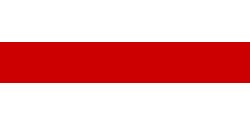


 Belarusportal


