The year 1920 in science and technology involved some significant events, listed below.
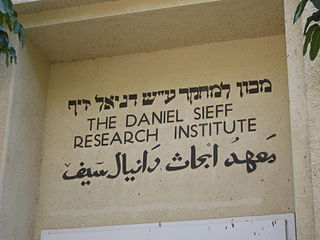
The Weizmann Institute of Science is a public research university in Rehovot, Israel, established in 1934, 14 years before the State of Israel. It differs from other Israeli universities in that it offers only postgraduate degrees in the natural and exact sciences.
Louisa Johnson, is a singer who won The X Factor in 2015.
Schmidt is a common German occupational surname derived from the German word "Schmied" meaning "blacksmith" and/or "metalworker". This surname is the German equivalent of "Smith" in the English-speaking world.
Friedel or Friedl is a Southern German diminutive variation of the surname Fried - or alternately, a diminutive of Elfriede - and may refer to:
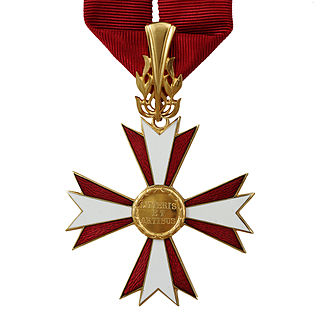
The Austrian Decoration for Science and Art is a state decoration of the Republic of Austria and forms part of the national honours system of that country.
Gerhard Carl Schmidt was a German chemist.
Haldor Topsøe may refer to:
Gerhard Martin Julius Schmidt, organic chemist and chemical crystallographer, director of the Weizmann Institute of Science in the late 1950s and again in the late 1960s. Schmidt was the founder of X-ray crystallography at the Weizmann Institute and in Israel – a field in which Weizmann Institute's Professor Ada Yonath was awarded the Nobel Prize in Chemistry for 2009.
Saenger or Sänger may refer to:
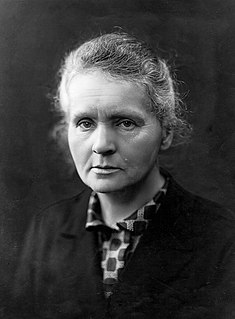
This is a list of women chemists. It should include those who have been important to the development or practice of chemistry. Their research or application has made significant contributions in the area of basic or applied chemistry.

Bekenntnis der Professoren an den Universitäten und Hochschulen zu Adolf Hitler und dem nationalsozialistischen Staat officially translated into English as the Vow of allegiance of the Professors of the German Universities and High-Schools to Adolf Hitler and the National Socialistic State was a document presented on 11 November 1933 at the Albert Hall in Leipzig. It had statements in German, English, Italian, and Spanish by selected German academics and included an appendix of signatories. The purge to remove academics and civil servants with Jewish ancestry began with a law being passed on 7 April 1933. This document was signed by those that remained in support of the Third Reich.
The Fridtjof Nansen Prize for Outstanding Research is a Norwegian research award. It is conferred by the Nansen Trust and its associated trusts, and it was established in 1896 after the return of the Fram Expedition.
Gerhard Schmidt was a German-born physician and biochemist who was regarded as "a world authority on nucleic acids and phospholipids."
This page is based on this
Wikipedia article Text is available under the
CC BY-SA 4.0 license; additional terms may apply.
Images, videos and audio are available under their respective licenses.
