
Paraíba is a state of Brazil. It is located in the Brazilian Northeast, and it is bordered by Rio Grande do Norte to the north, Ceará to the west, Pernambuco to the south and the Atlantic Ocean to the east. Paraíba is the third most densely populated state of the Northeast; João Pessoa, the sea-bordered state capital, and Campina Grande, in the interior, rank among the fifteen-largest municipalities in the Northeast of Brazil. The state is home to 1.9% of the Brazilian population and produces 0.9% of the Brazilian GDP.

The Federal University of Rio Grande do Sul is a Brazilian public federal research university based in Porto Alegre, Rio Grande do Sul. UFRGS is among the largest and highest-rated universities in Brazil, having one of the largest number of scientific publications. From 2012 to 2019, the university was elected as the best federal university of Brazil. UFRGS has over 31,000 undergraduate students, over 12,000 graduate students, and more than 2,600 faculty members. As a Brazilian public federal institution, students do not pay tuition fees to enroll in courses offered by the university.

The Federal Rural University of Pernambuco is a public university in Recife, Pernambuco, Brazil. Specializing in courses in agricultural sciences and other courses relating to rural development, the university also conducts research in these areas. However, in recent years the university has also added a variety of courses focused less on rural topics.
Quintiliano H. de Mesquita, Brazilian physician and scientist, was born in João Pessoa, state of Paraíba. His parents were Odilon Martins de Mesquita, trader, and Nathália Guedes Pereira.

Ariano Vilar Suassuna was a Brazilian playwright and author. He was the driving force behind the creation of the Movimento Armorial. He founded the Student Theater at Federal University of Pernambuco. Four of his plays have been filmed, and he was considered one of Brazil's greatest living playwrights of his time. He was also an important regional writer, doing various novels set in the Northeast of Brazil. He received an honorary doctorate at a ceremony performed at a circus. He was the author of, among other works, the Auto da Compadecida and A Pedra do Reino. He was a staunch defender of the culture of the Northeast, and his works dealt with the popular culture of the Northeast.

Federal University of Pernambuco is a public university in Recife, Brazil, established in 1946. UFPE has 70 undergraduate courses and 175 postgraduate courses. As of 2007, UFPE had 35,000 students and 2,000 professors. The university has three campuses: Recife, Vitória de Santo Antão, and Caruaru. Its main campus, Campus Reitor Joaquim Amazonas, is located in western Recife, in the Cidade Universitária neighborhood. The Recife Law School, established in 1827, is located downtown.
The Prêmio José Reis de Divulgação Científica is an annual honor awarded by the Brazilian Council of Scientific and Technological Development (CNPq) to the institution, media organization, publication, or individual who most contributed to the dissemination and public awareness of science and technology in Brazil. It is thus named in honor of Dr. José Reis, a Brazilian biologist and science writer who was one of the pioneers in the field.

The Law School of the University of São Paulo is an institution of higher education and research in the field of law located in São Paulo, Brazil. It joined the University of São Paulo (USP) in 1934, when the latter was established.
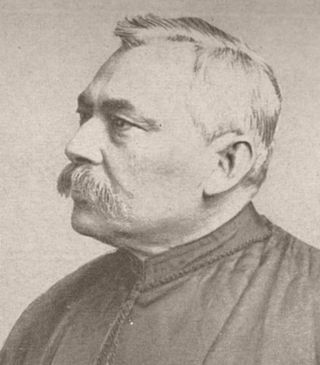
Sílvio Vasconcelos da Silveira Ramos Romero was a Brazilian "Condorist" poet, essayist, literary critic, professor, journalist, historian and politician.

João Pessoa Cavalcanti de Albuquerque was a Brazilian politician and lawyer who served as the governor of Paraíba between 1928 and 1930.

Dutch Brazilians refers to Brazilians of full or partial Dutch ancestry. Dutch Brazilians are mainly descendants of immigrants from the Netherlands.

The Federal University of Rio de Janeiro Faculty of Law, also known as the National Faculty of Law, is a law school located in downtown Rio de Janeiro, Brazil.

João Carlos de Medeiros Pardal Mallet was a Brazilian journalist and novelist. He is the patron of the 30th chair of the Brazilian Academy of Letters.

Epitácio Lindolfo da Silva Pessoa was a Brazilian politician and jurist who served as 11th president of Brazil between 1919 and 1922, when Rodrigues Alves was unable to take office due to illness, after being elected in 1918. His period of government was marked by military revolts that would culminate in the Revolution of 1930, which brought Getúlio Vargas into control of the federal government.
Nilo de Oliveira Pereira was a Brazilian journalist and teacher.
Alvacir dos Santos Raposo Filho is a Brazilian physician and writer.

Universidade Estadual do Maranhão is a public state university in the state of Maranhão, Brazil. It was founded on March 25, 1987, and is based in São Luís. In addition to the Universidade Federal do Maranhão (UFMA), it was the second university in the state. In September 2016, part of it was dismembered for creation of a third, the newly founded Universidade Estadual da Região Tocantina do Maranhão (UEMASUL). With more than 20 thousand students, the institution has 22 campuses and 25 university centers. In the university ranking, it ranks 157th in Brazil. The university rector is Gustavo Pereira da Costa.
The current Brazilian Civil Code has been in force since January 11 or 12, 2003, after its one-year vacatio legis. The first version dates from 1916, after the publication of Law No. 3,071 of the same year.


