
![Corporate headquarters in 1898; drawing by
Paul Schmohl [de] Verlagsgebaude der Deutschen Verlags-Anstalt in der Neckarstrasse 121-123 in Stuttgart, 1898.jpg](http://upload.wikimedia.org/wikipedia/commons/thumb/1/10/Verlagsgeb%C3%A4ude_der_Deutschen_Verlags-Anstalt_in_der_Neckarstra%C3%9Fe_121%E2%80%93123_in_Stuttgart%2C_1898.jpg/700px-Verlagsgeb%C3%A4ude_der_Deutschen_Verlags-Anstalt_in_der_Neckarstra%C3%9Fe_121%E2%80%93123_in_Stuttgart%2C_1898.jpg)
Paul Schmohl
Georg Eduard Hallberger, after 1869: von Hallberger (29 March 1822, Stuttgart - 29 August 1880, Tutzing) was a German publisher and businessman.
Georg Eduard Hallberger, after 1869: von Hallberger (29 March 1822, Stuttgart - 29 August 1880, Tutzing) was a German publisher and businessman.
He was the son of Ludwig Hallberger , a publisher and bookseller. After serving an apprenticeship in his father's company, he spent his journeyman years at publishers in Potsdam and Berlin. Upon returning to Stuttgart, during the Revolutions, he started his own publishing firm, with an emphasis on youth and folk literature. In 1850, he began issuing a monthly magazine for young people, Jugend-Album , which was published until 1889.
In 1853, he created the family magazine, Illustrirte Welt , which was very successful and eventually had a circulation of 150,000 copies. Encouraged by this, he joined with the writers, Friedrich Wilhelm Hackländer and Edmund Zoller (1822-1902), to create the illustrated news magazine Über Land und Meer . This was equally successful and was published until 1923. Later magazines failed to match the popularity of these first two.
To produce his illustrations, he created "E. Hallberger X. A."; among the largest xylographic companies in Germany. One of his most popular works, Aegypten in Bild und Wort (Egypt in Image and Word), with commentary by the Egyptologist, Georg Ebers, was issued in 1879 and translated into several languages, including English, French and Czech.
After the Franco-Prussian War, he founded a major subsidiary in Leipzig. In 1873, the companies merged and he built new corporate headquarters, designed by Georg von Morlok , which were destroyed by a bombing raid in 1944. Over the years, he expanded his business interests to include coal companies, bricklayers, quarries, cement and paper mills. In Switzerland, he owned a creamery. He also became a major property owner, with buildings throughout Stuttgart and a "castle" in Tutzing, on the Starnberger See.
In 1869, he was named a "Kommerzienrat " and elevated to the nobility in Württemberg. He died at his castle in 1880. Per his wishes, his holdings were transferred to a stock company called the Deutsche Verlags-Anstalt (now a division of Random House). A "Temple of Honor", erected at Ilkahöhe by his daughter, Gabriele, was demolished in the 1970s


Theodosius Andreas Harnack was a Baltic German theologian.
Andreas Stöberl, better known by his latinised name Andreas Stiborius (Boius), was a German humanist astronomer, mathematician, and theologian working mainly at the University of Vienna.

Eduard Julius Friedrich Bendemann was a German painter.

Adolf Richard Hölzel was a German painter. He began as a Realist, but later became an early promoter of various Modern styles, including Abstractionism.
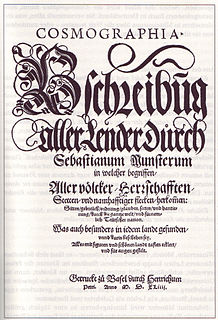
The Cosmographia ("Cosmography") by Sebastian Münster (1488–1552) from 1544 is the earliest German-language description of the world.

John Casimir, Count Palatine of Zweibrücken-Kleeburg was the son of John I, Count Palatine of Zweibrücken and his wife, Duchess Magdalene of Jülich-Cleves-Berg and was the founder of a branch of Wittelsbach Counts Palatine often called the Swedish line, because it gave rise to three subsequent kings of Sweden, but more commonly known as the Kleeburg line.

Johann Georg Noel Dragendorff was a German pharmacist and chemist born in Rostock.
Eckhard Jesse is a German political scientist. He held the chair for "political systems and political institutions" at the Technical University of Chemnitz from 1993 to 2014. Jesse is one of the best known German political scholars in the field of extremism and terrorism studies. He has also specialized in the study of German political parties and the German political system.
Georg Köberle was a German author and dramatist.
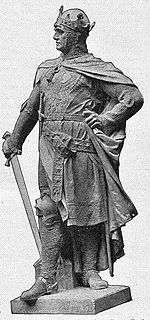
Albert II, Margrave of Brandenburg was a member of the House of Ascania. He was Margrave of Brandenburg from 1205 until his death in 1220.

Jörg Syrlin the Elder was a German sculptor who is considered part of the Ulm school. After his death his son Jörg Syrlin the Younger took over command of his workshop. His best known works are the carvings for the choir stalls of the Ulm Minster.

Hans Philipp Werner, Freiherr von und zu Aufseß (1801–1872) was a German baron, antiquarian and founder of the Germanisches Museum in Nuremberg.

Friedrich Wilhelm Heinrich Theodor Hosemann was a German genre painter, draftsman, illustrator and caricaturist.
Carl Klönne was a German Banker.

Carl Duncker was a German publisher. He played an important part in the early creation and growth of the publishing firm which became Duncker & Humblot, more recently the publishers of the Neue Deutsche Biographie, a biographical dictionary.
Ferdinand Geminian Wanker was a German Roman Catholic moral theologian.
Johannes Sylvius Egranus was a German theologian, humanist, reformer and a friend of Martin Luther.

Theodor von Cramer-Klett was a German entrepreneur and banker.
Wilhelm Franz Josef Kosch was a German historian of literature and theatre and lexicographer. The lexicon that he conceived and later revised several times, the Deutsches Literatur-Lexikon is a references in the field of German literature.
Hermann Blohm was a German shipbuilder and company founder of Blohm+Voss.
