Related Research Articles
Inquests in England and Wales are held into sudden or unexplained deaths and also into the circumstances of and discovery of a certain class of valuable artefacts known as "treasure trove". In England and Wales, inquests are the responsibility of a coroner, who operates under the jurisdiction of the Coroners and Justice Act 2009. In some circumstances where an inquest cannot view or hear all the evidence, it may be suspended and a public inquiry held with the consent of the Home Secretary.
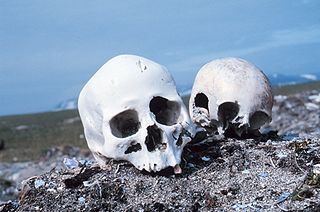
Forensic pathology is pathology that focuses on determining the cause of death by examining a corpse. A post mortem is performed by a medical examiner, usually during the investigation of criminal law cases and civil law cases in some jurisdictions. Coroners and medical examiners are also frequently asked to confirm the identity of a corpse. Also see forensic medicine.
A coroner is a government official who is empowered to conduct or order an inquest into the manner or cause of death, and to investigate or confirm the identity of an unknown person who has been found dead within the coroner's jurisdiction.

The Laws in Wales Acts 1535 and 1542 were parliamentary measures by which Wales was annexed to the Kingdom of England, the legal system of England was extended to Wales and the norms of English administration were introduced. The intention was to create a single state and legal jurisdiction. The Acts were passed during the reign of King Henry VIII of England, who came from the Welsh Tudor dynasty.

The Department for Constitutional Affairs (DCA) was a United Kingdom government department. Its creation was announced on 12 June 2003 with the intention of replacing the Lord Chancellor's Department. On 28 March 2007 it was announced that the Department for Constitutional Affairs would take control of probation, prisons and prevention of re-offending from the Home Office and be renamed the Ministry of Justice. This took place on 9 May 2007.
Criminal libel is a legal term, of English origin, which may be used with one of two distinct meanings, in those common law jurisdictions where it is still used.

A fatal accident inquiry is a Scottish judicial process which investigates and determines the circumstances of some deaths occurring in Scotland. Until 2009, they did not apply to any deaths occurring in other jurisdictions, when the Coroners and Justice Act 2009 extended the Fatal Accidents and Sudden Deaths Inquiry (Scotland) Act 1976 to service personnel at the discretion of the Chief Coroner or the Secretary of State. The equivalent process in England and Wales is an inquest. A major review of the fatal accident inquiries was undertaken by Lord Cullen of Whitekirk, at the request of the Scottish Government, which resulted in the passing of the Inquiries into Fatal Accidents and Sudden Deaths etc. (Scotland) Act 2016.

The Chartered Institute of Legal Executives (CILEx) is the professional body for Chartered Legal Executives in England and Wales and an examination board providing qualifications for Chartered Legal Executives, paralegals and legal secretaries.
Northern Irish law refers to the legal system of statute and common law operating in Northern Ireland since the partition of Ireland established Northern Ireland as a separate jurisdiction within the United Kingdom in 1921. Prior to 1921, Northern Ireland was part of the same legal system as the rest of Ireland.
Solicitor advocate is the title used by a solicitor who is qualified to represent clients as an advocate in the higher courts in England and Wales, Scotland and Northern Ireland.

The Coroner's Court of New South Wales is the court in the Australian state of New South Wales where legal proceedings, in the form of an inquest or inquiry, are held and presided over by the State Coroner of New South Wales, a Deputy State Coroner of New South Wales, or another coroner of the state of New South Wales.
An inquest is a judicial inquiry in common law jurisdictions, particularly one held to determine the cause of a person's death. Conducted by a judge, jury, or government official, an inquest may or may not require an autopsy carried out by a coroner or medical examiner. Generally, inquests are conducted only when deaths are sudden or unexplained. An inquest may be called at the behest of a coroner, judge, prosecutor, or, in some jurisdictions, upon a formal request from the public. A coroner's jury may be convened to assist in this type of proceeding. Inquest can also mean such a jury and the result of such an investigation. In general usage, inquest is also used to mean any investigation or inquiry.
A narrative verdict is a verdict available to coroners in England and Wales and in Ireland following an inquest. In such a verdict the circumstances of a death are recorded, having a brief free-form conclusion either instead of, or in addition to, one of the standard Short-Form Conclusions. Narrative verdicts were introduced in 2004.
The publication of an obscene libel was an offence under the common law of England. Prior to the abolition by section 1 of the Criminal Law Act 1967 of the distinction between felony and misdemeanour, it was regarded as a misdemeanour. It has been abolished in England and Wales and Northern Ireland.
Sir Peter Ribblesdale Thornton QC is a former Senior Circuit Judge and former Chief Coroner of England and Wales.
English law did not originally make a distinction between criminal and civil proceedings.
A death is suspicious if it is unexpected and its circumstances or cause are medically or legally unexplained. Normally, this occurs in the context of medical care, suicide or suspected criminal activity.
In many legal jurisdictions, the manner of death is a determination, typically made by the coroner, medical examiner, police, or similar officials, and recorded as a vital statistic. Within the United States and the United Kingdom, a distinction is made between the cause of death, which is a specific disease or injury, versus manner of death, which is primarily a legal determination. Different categories are used in different jurisdictions, but manner of death determinations include everything from very broad categories like "natural" and "homicide" to specific manners like "traffic accident" or "attempted or self-induced abortion". In some cases an autopsy is performed, either due to general legal requirements, because the medical cause of death is uncertain, upon the request of family members or guardians, or because the circumstances of death were suspicious.
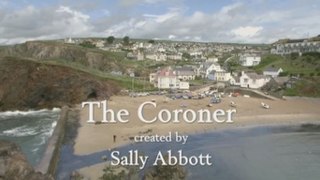
The Coroner is a BBC Birmingham daytime drama series of 20 episodes starring Claire Goose as Jane Kennedy, a coroner based in a fictional South Devon coastal town. Matt Bardock stars as Detective Sergeant Davey Higgins.