
Segovia is a city in the autonomous region of Castile and León, Spain. The city is famous for its historic buildings including the three main landmarks: its midtown Roman aqueduct, its cathedral, and the castle, which was an influence for Walt Disney's Cinderella Castle. The city center of Segovia was declared World Heritage by the Unesco in 1985. It is the capital of Province of Segovia.
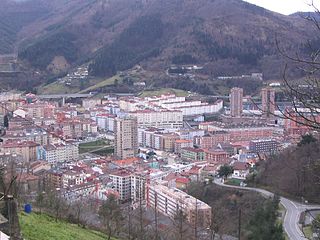
Eibar is a city and municipality within the province of Gipuzkoa, in the Basque Country of Spain. It is the head town of Debabarrena, one of the comarcas of Gipuzkoa.
San Andrés–Providencia creole is an English-based creole language spoken in the San Andrés and Providencia Department of Colombia by the native Raizals, very similar to Belize Kriol and Miskito Coastal Creole. Its vocabulary originates in English, but it has its own phonetics and many expressions from Spanish and African languages, particularly Kwa languages and Igbo languages. The language is also known as "San Andrés Creole", "Bende" and "Islander Creole English".

Uncastillo (Aragonese: Uncastiello) is a municipality in the province of Zaragoza, Aragon, eastern Spain. According to the 2010 census, the municipality has a population of 781 inhabitants.
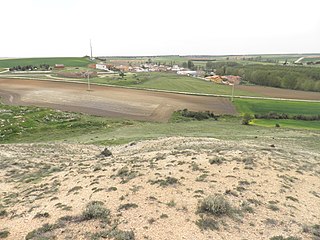
Vallesa de la Guareña is a municipality located in the province of Zamora, Castile and León, Spain. According to the 2015 census (INE), the municipality has a population of 106 inhabitants.

The Church of Saint Cajetan, known as the church of San Millán y San Cayetano is a Baroque church in Madrid, Spain.

San Andrés de Machaca Municipality is the fifth municipal section of the Ingavi Province in the La Paz Department, Bolivia. Its seat is San Andrés de Machaca.
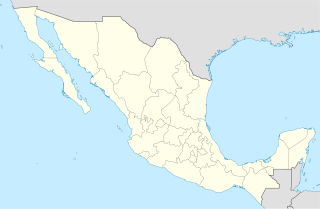
San Andrés Cholula Municipality is a municipality in Puebla in south-eastern Mexico. It forms part of the Metropolitan area of Puebla, and as of 2011, it is the fastest-growing municipality that conforms the Metropolitan Area, partly because the presence of universities and the wealthiest neighborhoods are located on San Andres Cholula. Along with San Pedro Cholula and Santa Isabel Cholula, it conforms the most ancient still inhabited city in the Americas, Cholula de Rivadabia.
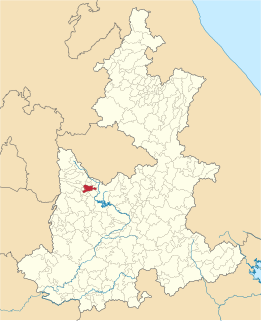
San Pedro Cholula is a municipality in the Mexican state of Puebla and one of two municipalities which made up the city of Cholula. The city has been divided into two sections since the pre Hispanic era, when revolting Toltec-Chichimecas pushed the formerly dominant Olmec-Xicallanca to the eastern side of the city in the 13th century. The new lords called themselves Cholutecas and built a new temple to Quetzalcoatl on the San Pedro side, which eventually eclipsed the formerly prominent Great Pyramid of Cholula, now on the San Andrés side. When the Spanish arrived in the 16th century, the city of Cholula was an important religious and economic center, but the center of power was on the San Pedro side, centered on what is now the main city plaza and the San Gabriel monastery. The division of the city persisted and San Pedro remained the more dominant, with Spanish families moving onto that side and the rest of the population quickly becoming mestizo. Today, San Pedro is still more commercial and less residential than neighboring San Andrés with most of its population employed in industry, commerce and services rather than agriculture. Although Cholula's main tourist attraction, the Pyramid, is in San Andrés, San Pedro has more tourism infrastructure such as hotels, restaurants and bars.

The Basilica of Saint Mary of Coro is a baroque Roman Catholic parish church and minor basilica completed in 1774. It is located in the "Parte Vieja" of the city of San Sebastián, Gipuzkoa, Basque Country, Spain.

The Church of San Andrés Apóstol is a church located in Cubas de la Sagra, Spain. It was declared Bien de Interés Cultural in 1983.

The Church de San Andrés is a church in Madrid, Spain. It was declared Bien de Interés Cultural in 1995.

The Church of San Andrés is a church located in Elciego, Spain. It was declared Bien de Interés Cultural in 1984.

The Church of San Martín is a church located in La Gineta, Spain. It was declared Bien de Interés Cultural in 1992.
Iglesia de San Andrés may refer to:
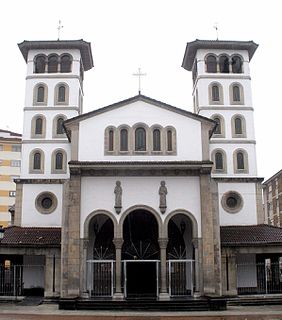
Iglesia de San Andrés is a parish church in San Martín del Rey Aurelio, Asturias, Spain. The Romanesque Revival-style building is situated in the urban area of El Entrego within the Linares parish of the Roman Catholic Archdiocese of Oviedo.

The San Andres Apostol Parish Church, popularly known as Masinloc Church, is a 19th-century Baroque church located at Brgy. South Poblacion, Masinloc, Zambales, Philippines. The parish church, dedicated to Saint Andrew the Apostle, is under the jurisdiction of the Roman Catholic Diocese of Iba. The church structure, a standout among Spanish-era churches in the Central Luzon region for having been built with coral stone instead of adobe stone, was declared a National Cultural Treasure by the National Museum of the Philippines along with 25 other Spanish-era churches in 2001.
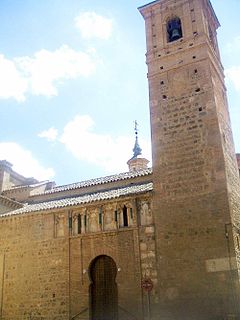
The iglesia de San Andrés is a church located in the city of Toledo, in Castile-La Mancha, Spain. The iglesia de San Andrés, as is common in this city, is a mix of different styles. On the one hand, there are present Mudéjar and Gothic architecture, and also, the Baroque, following a remodeling of the 17th century. After the last restoration traceries appeared in the facade that evoke the eclecticism of the crossing. A Visigoth relief and two Visigothic pilasters was also discovered.


