A resistance movement is an organized group of people that tries to resist or try to overthrow a government or an occupying power, causing disruption and unrest in civil order and stability. Such a movement may seek to achieve its goals through either the use of violent or nonviolent resistance, or the use of force, whether armed or unarmed. In many cases, as for example in the United States during the American Revolution, or in Norway in the Second World War, a resistance movement may employ both violent and non-violent methods, usually operating under different organizations and acting in different phases or geographical areas within a country.

National Armed Forces was a Polish right-wing underground military organization of the National Democracy operating from 1942. During World War II, NSZ troops fought against Nazi Germany and communist partisans. There were also cases of fights with the Home Army.
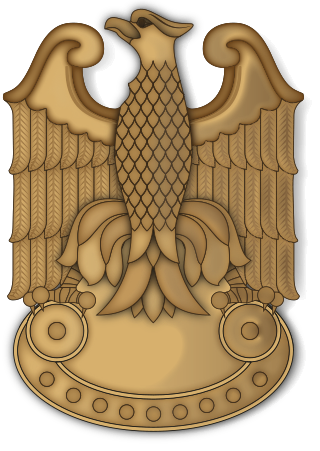
The People's Army was a communist partisan force of the Polish Workers' Party (PPR) active in Occupied Poland during World War II from January to July 1944. It was created on the order of the Soviet-backed State National Council to fight against Nazi Germany and support the Red Army against the German forces in Poland.
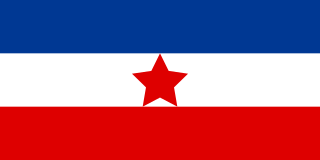
The Yugoslav Partisans, or the National Liberation Army, officially the National Liberation Army and Partisan Detachments of Yugoslavia, was the communist-led anti-fascist resistance to the Axis powers in occupied Yugoslavia during World War II. Led by Josip Broz Tito, the Partisans are considered to be Europe's most effective anti-Axis resistance movement during World War II.
During World War II, resistance movements operated in German-occupied Europe by a variety of means, ranging from non-cooperation to propaganda, hiding crashed pilots and even to outright warfare and the recapturing of towns. In many countries, resistance movements were sometimes also referred to as The Underground.
The People's Liberation Army is the military of the People's Republic of China. It may also refer to:

A partisan is a member of a domestic irregular military force formed to oppose control of an area by a foreign power or by an army of occupation by some kind of insurgent activity.

In Poland, the resistance movement during World War II was led by the Home Army. The Polish resistance is notable among others for disrupting German supply lines to the Eastern Front, and providing intelligence reports to the British intelligence agencies. It was a part of the Polish Underground State.

Poland was invaded and annexed by Nazi Germany and the Soviet Union in the aftermath of the invasion of Poland in 1939. In the pre-war Polish territories annexed by the Soviets the first Soviet partisan groups were formed in 1941, soon after Operation Barbarossa, the German invasion of the Soviet Union. Those groups fought against the Germans, but conflicts with Polish partisans were also common.

During World War II, Lithuania was occupied twice by the Soviet Union and once by Nazi Germany (1941–1944). Resistance took many forms.

The "cursed soldiers" or "indomitable soldiers" were a heterogeneous array of anti-Soviet-imperialist and anti-communist Polish resistance movements formed in the later stages of World War II and in its aftermath by members of the Polish Underground State. The above terms, introduced in the early 1990s, reflect the stance of many of the diehard soldiers.
Anti-communist resistance in Poland can be divided into two types: the armed partisan struggle, mostly led by former Armia Krajowa and Narodowe Siły Zbrojne soldiers, which ended in the late 1950s, and the non-violent, civil resistance struggle that culminated in the creation and victory of the Solidarity trade union.
The anti-communist resistance in Poland, also referred to as the Polish anti-communist insurrection fought between 1944 and 1953, was an anti communist and anti-Soviet armed struggle by the Polish Underground against the Soviet domination of Poland by the Soviet-installed People's Republic of Poland, since the end of World War II in Europe. The guerrilla warfare conducted by the resistance movement formed during the war, included an array of military attacks launched against communist prisons, state security offices, detention facilities for political prisoners, and prison camps set up across the country by the Stalinist authorities.
Anti-Soviet partisans may refer to various resistance movements that opposed the Soviet Union and its satellite states at various periods during the 20th century, between the Russian Revolution (1917) and the collapse of the Soviet Union (1991).

Latvian national partisans were Latvian pro-independence partisans who waged guerrilla warfare against Soviet rule during and after the Second World War.

Lithuanian partisans were partisans who waged guerrilla warfare in Lithuania against the Soviet Union in 1944–1953. Similar anti-Soviet resistance groups, also known as Forest Brothers and cursed soldiers, fought against Soviet rule in Estonia, Latvia and Poland. An estimated total of 30,000 Lithuanian partisans and their supporters were killed. The Lithuanian partisan war lasted almost for a decade, thus becoming one of the longest partisan wars in Europe.

During the Second World War, resistance movements that bore any resemblance to irregular warfare were frequently dealt with by the German occupying forces under the auspices of anti-partisan warfare. In many cases, the Nazis euphemistically used the term "anti-partisan operations" to obfuscate ethnic cleansing and ideological warfare operations against perceived enemies; this included Jews, Communist officials, Red Army stragglers, and others. This was especially the case on the Eastern Front, where anti-partisan operations often resulted in the massacres of innocent civilians. While the worst atrocities in terms of scale occurred in the Eastern theater of the war, the Nazis employed "anti-partisan" tactics in Western Europe as well.
Anti-communist insurgencies continued in Central and Eastern Europe after the end of World War II. They were suppressed by the Soviet Union and its satellite states. Prominent movements include:
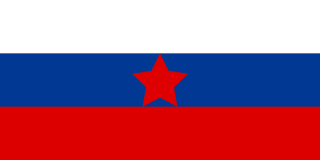
The Slovene Partisans, formally the National Liberation Army and Partisan Detachments of Slovenia, were part of Europe's most effective anti-Nazi resistance movement led by Yugoslav revolutionary communists during World War II, the Yugoslav Partisans. Since a quarter of Slovene ethnic territory and approximately 327,000 out of total population of 1.3 million Slovenes were subjected to forced Italianization after the end of the First World War, and genocide of the entire Slovene nation was being planned by the Italian fascist authorities, the objective of the movement was the establishment of the state of Slovenes that would include the majority of Slovenes within a socialist Yugoslav federation in the postwar period.

The Croatian Partisans, officially the National Liberation Movement in Croatia, were part of the anti-fascist National Liberational Movement in the Axis-occupied Yugoslavia which was the most effective anti-Nazi resistance movement. It was led by Yugoslav revolutionary communists during the World War II. NOP was under the leadership of the League of Communists of Yugoslavia (KPJ) and supported by many others, with Croatian Peasant Party members contributing to it significantly. NOP units were able to temporarily or permanently liberate large parts of Croatia from occupying forces. Based on the NOP, the Federal Republic of Croatia was founded as a constituent of the Democratic Federal Yugoslavia.
